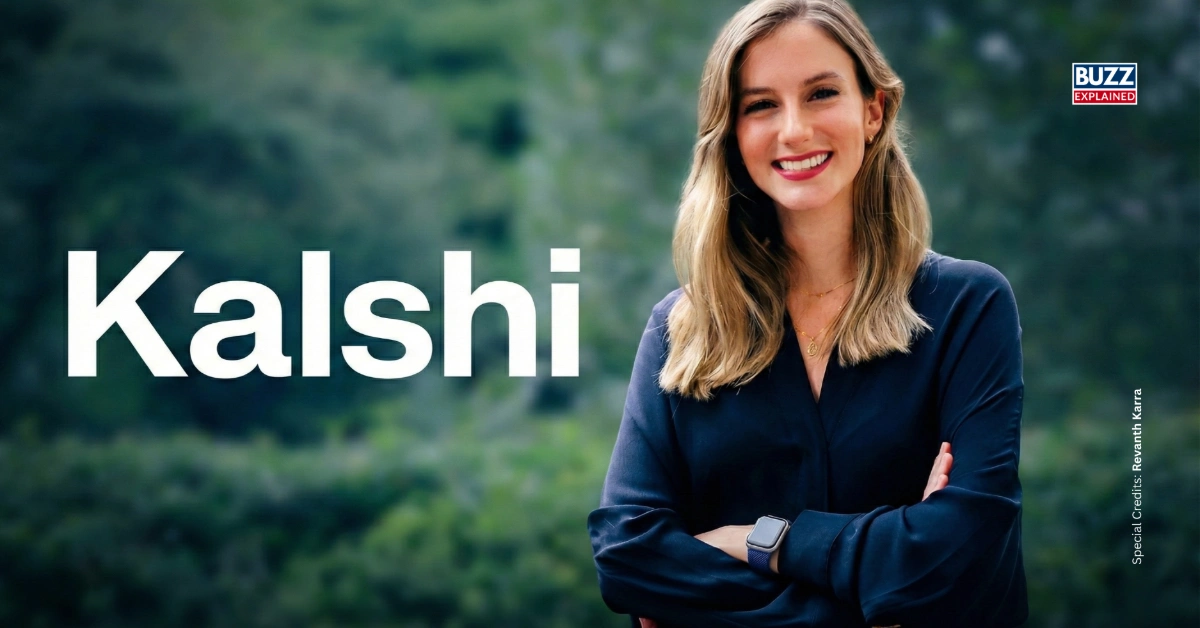
From dodging glass in ballet shoes at Brazil’s Bolshoi Theatre to dethroning Taylor Swift’s successor as the world’s youngest self-made woman billionaire—Luana Lopes Lara just turned her prediction market startup Kalshi into an $11 billion empire. And Wall Street can’t stop throwing money at her.
Quick Takeaways
- Luana Lopes Lara, 29, is now worth $1.3 billion after Kalshi raised $1 billion at an $11 billion valuation (December 2, 2025)
- She dethroned Lucy Guo (Scale AI) as the world’s youngest self-made woman billionaire—who herself beat Taylor Swift months earlier
- Kalshi’s valuation exploded from $2 billion to $11 billion in just 6 months (June to December 2025)
- Trading volumes surged 1,000% to $1 billion weekly, with November hitting $5.8 billion in total volume
- Kalshi secured exclusive partnerships with CNN and CNBC this week to integrate prediction data across broadcasts
- Over 90% of Kalshi’s trades are now sports-related, not politics—fueling rivalry with DraftKings and FanDuel
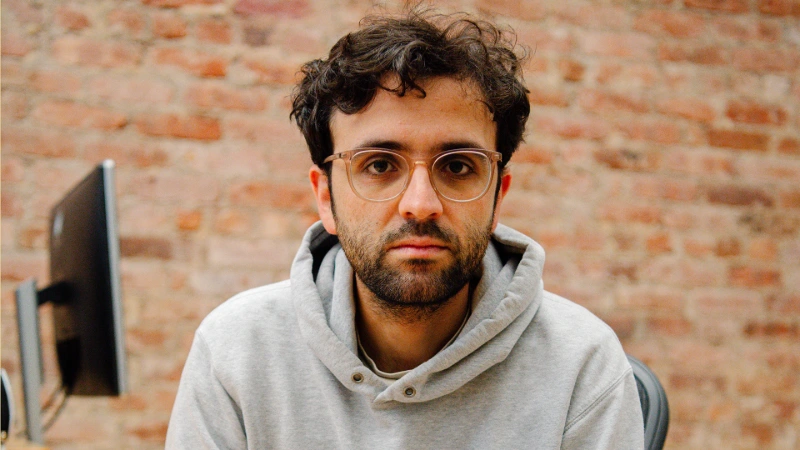
- Co-founded with MIT classmate Tarek Mansour, also 29, who’s also now a billionaire ($1.3B)
From Ballerina to Billionaire: The Untold Story
Born in Brazil, Luana Lopes Lara spent her teenage years training at the prestigious Bolshoi Theatre School—where competition was so cutthroat that rivals allegedly placed glass shards in each other’s ballet shoes. Her daily routine was brutal: academics from 7 a.m. to noon, followed by ballet training from 1 p.m. to 9 p.m..
After graduating in 2013, she pursued her ballet dream professionally in Austria for nine months before making a radical pivot: she gave up dance entirely to enroll at MIT, chasing a bigger ambition—to become the next Steve Jobs.
At MIT, she earned dual degrees in computer science and mathematics while interning for hedge fund legends Ray Dalio at Five Rings Capital and billionaire Ken Griffin. It was there she met her future co-founder, Tarek Mansour, who started sitting next to her in class specifically to learn from her.
“We saw that most trading happens when people have some view about the future, and then try to find a way to put that in the markets.”
— Luana Lopes Lara on the spark for Kalshi
The idea for Kalshi struck during a late-night walk back to their intern apartments in New York City in 2018.
Kalshi’s Explosive 2025 Growth

| Metric | June 2025 | October 2025 | December 2025 | Growth |
|---|---|---|---|---|
| Valuation | $2 billion | $5 billion | $11 billion | 450% in 6 months |
| Luana’s Net Worth | ~$250 million | ~$625 million | $1.3 billion | 420% increase |
| Weekly Trading Volume | ~$100 million | ~$400 million | $1+ billion | 900%+ surge |
| November Monthly Volume | — | $4.49 billion | $5.8 billion | 29% month-over-month |
| Funding Raised (2025 Total) | $185 million | $300 million | $1 billion | $1.485B total YTD |
| Primary Investor (Latest) | — | Sequoia/a16z | Paradigm (lead) | Crypto VC backing |
| Sports Trading % of Volume | — | — | 90%+ | Dominates platform |
The $1 Billion Week That Changed Everything
In a stunning 72-hour span this week, Kalshi announced three game-changing moves:
1. December 2: $1 Billion Funding at $11 Billion Valuation
Crypto-focused VC firm Paradigm led the round, with backing from Sequoia Capital, Andreessen Horowitz, CapitalG, and Y Combinator. This marked Kalshi’s third funding round in 2025 alone, with its valuation doubling in under two months.
2. December 3: CNN Partnership
Kalshi became CNN’s official prediction market partner, integrating real-time probability data across CNN’s broadcasts and digital platforms starting 2026.
3. December 4: CNBC Exclusive Deal
Just 24 hours after CNN, Kalshi announced a multi-year exclusive partnership with CNBC to display prediction market data on TV, online, and apps.
These media deals position Kalshi as the Bloomberg of prediction markets—embedding its data into mainstream financial news the way stock tickers became ubiquitous.
The Sports Betting Bombshell (And Why DraftKings Is Worried)
Here’s what Wall Street missed: While everyone focused on Kalshi’s 2024 election contracts (which correctly predicted Trump’s win a month early), over 90% of current trading volume comes from sports.
Kalshi’s sports contracts—on NFL games, NBA outcomes, and even Super Bowl props—exploded during football season, with more money traded on sports last week than during the entire 2024 election week. When Kalshi announced complex “parlay” bets (e.g., “Will the Bears, Bills, and Browns all win?”), DraftKings and FanDuel stocks dropped over 10%.
The difference? Kalshi operates in all 50 states as a federally regulated CFTC exchange, not state-by-state sports betting. Competitors call it a loophole; Kalshi calls it innovation.
The Legal Landmine in Nevada
Not everyone’s celebrating. On November 26, a Nevada federal judge ruled that Kalshi’s sports contracts constitute sports betting and must comply with state gaming laws—not just federal CFTC oversight. Judge Andrew Gordon wrote that Kalshi’s products are “sports wagers and everyone who sees them knows it”.
Kalshi filed an emergency appeal and warned of potential criminal enforcement if forced to shut down Nevada operations. The company previously marketed itself as offering “legal sports betting nationwide” despite lacking state gaming licenses.
Kalshi vs. Polymarket: The Billion-Dollar Rivalry
Kalshi’s chief rival, Polymarket, was valued at $9 billion in October—but a Columbia University study found Polymarket’s trading volume may be inflated by 20%. While Polymarket remains crypto-native and blocks U.S. users (for now), Kalshi has dominated recent months with regulated, dollar-based trading.
Both platforms are growing explosively, but Kalshi’s CFTC approval in 2020 gave it first-mover advantage as the first federally regulated prediction market.
What’s Next: The $100 Million Customer Goal
Kalshi plans to deploy its fresh $1 billion toward three priorities:
- Brokerage integrations: Already partnered with Robinhood and Webull; expanding to more platforms
- Media partnerships: CNN and CNBC are just the start
- Product expansion: New markets beyond sports and politics (weather, business events, entertainment)
With millions of users already trading weekly and volumes exceeding $1 billion, Kalshi is targeting 100 million customers globally.
Subscribe to our finance newsletter for the latest billionaire news and startup stories.
Stay informed with the latest news, in-depth analysis, entertainment, technology, sports and exclusive insights like Snowflake, Larry Ellison, and Connie Britton. Visit Buzz Explained for more top stories, updates, and expert coverage from all around the world!