Season 1 of Fallout was a surprise. Nobody was prepared for how good it was.
Fallout Season 2 had a different problem. Everyone was waiting — and everyone had an opinion about New Vegas before a single episode aired. Fans of the 2010 game Fallout: New Vegas are a specific kind of devoted. They have been asking for a direct adaptation for fifteen years. They know every street corner, every faction, every line of dialogue. They were never going to be an easy audience.
Fallout Season 2 premiered on Amazon Prime Video on December 16, 2025, with eight episodes rolling out weekly every Wednesday, finishing with the finale on February 3, 2026. It had already been renewed for a third season before Episode 1 dropped. That confidence — and whether it was earned — is the real story here.
What Fallout Season 2 Is Actually About
The season picks up right where Season 1 ended. Lucy MacLean (Ella Purnell) and The Ghoul (Walton Goggins) are now uneasy allies moving through the Mojave wasteland toward New Vegas. She needs to find her father, Hank MacLean (Kyle MacLachlan), who fled to New Vegas at the end of Season 1 — and who turns out to be carrying secrets far worse than she understood. The Ghoul is searching for his own family: Cooper Howard, the man he was before the bombs fell, had a wife and a daughter, and the trail leads the same direction Lucy is already going.
Back in the Brotherhood of Steel, Maximus (Aaron Moten) is now a knight facing a faction on the edge of civil war. The Brotherhood has always been one of the more interesting elements of the show — a military order that survived the apocalypse by being rigidly hierarchical, which is exactly the kind of institution that eventually collapses from the inside. Fallout Season 2 pushes that pressure further.
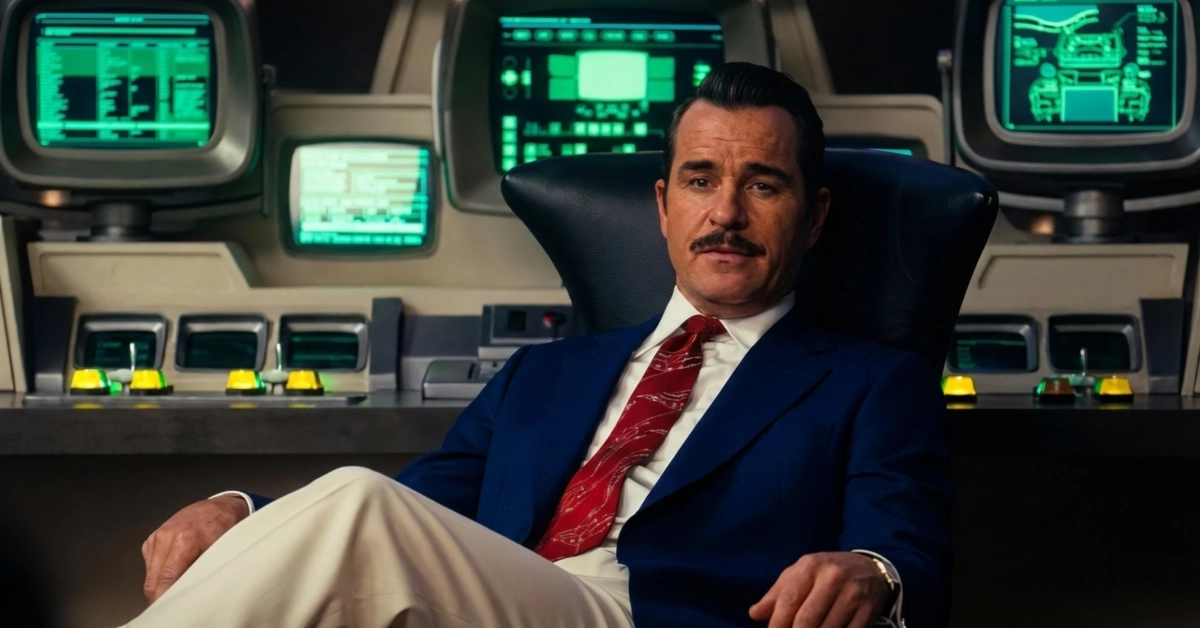
And then there’s New Vegas itself. A post-nuclear city that still has lights on. Casinos running. People choosing entertainment over survival. Mr. House — the mysterious figure who runs the city from a penthouse most people have never seen — gets a proper Fallout Season 2 arc. The Kings, a gang of Elvis-inspired ghouls who function as New Vegas’s street-level power structure, are exactly as strange and exactly as fun as that description implies.
Norm MacLean (Moisés Arias) and Barb Howard (Frances Turner) round out the main cast from Season 1, both returning in roles that deepen significantly once the season finds its stride.
The New Faces — Including One Nobody Expected
Kumail Nanjiani joins the cast as a Brotherhood of Steel pilot. It’s a well-cast addition — Nanjiani has the specific energy of someone who believes in an institution slightly more than the institution deserves, which is exactly what the Brotherhood civil war storyline needs.
But the casting that people actually talked about was Macaulay Culkin.
Culkin appears in a surprise cameo as a member of Caesar’s Legion — the Roman-styled slave army that serves as one of Fallout: New Vegas‘s primary antagonist factions. It is a genuinely strange piece of casting. Culkin has leaned into his own cultural weirdness for years, and putting him in a toga in a post-apocalyptic wasteland is the kind of choice that only works if the show is already confident enough to be weird.
Fallout Season 2 is that confident. That matters.
Why the Weekly Release Was the Right Call
Amazon released Season 1 all at once. For Fallout Season 2, they went weekly — eight episodes, one per Wednesday, December through February.
The decision was criticized before the season started. Streaming audiences are used to bingeing. Weekly releases feel like a step backward to a lot of people. But the choice made sense for this specific show, and the results proved it.
Each episode of Fallout Season 2 is dense. The world-building alone requires time to process — the factions, the history, the game references landing alongside original story beats. Dropping all eight at once would have buried the conversation the show generates. Instead, each week brought a new wave of fan analysis, theory, and reaction. The show stayed in the cultural conversation from mid-December through early February — nearly seven weeks of sustained engagement on a single season of television.
What strikes me most about this strategy is how deliberately it positioned Fallout against the binge-and-forget pattern that has quietly hurt some of Prime Video’s best shows. The Boys runs weekly. The Last of Us runs weekly. The shows that people actually talk about — deeply, week after week — almost always do.
The Ghoul Is Still the Show
Let’s be honest about what drives Fallout at its core.
Walton Goggins as Cooper Howard — a 1950s Hollywood cowboy actor who survived nuclear annihilation, spent 200 years becoming a ghoul, and emerged as the most efficient and most morally complicated man in the wasteland — is one of the best performances on television right now. Not “for a genre show.” Not “considering the material.” One of the best, full stop.
Fallout Season 2 gives him more. The flashback structure that worked so well in Season 1 continues here, cutting between Cooper Howard in the pre-war years — his marriage to Barb Howard (Turner), his creeping awareness that the people around him built the apocalypse on purpose — and The Ghoul in the present, making choices that make sense given everything you’ve just seen in the past.
Lucy and The Ghoul’s dynamic is the beating heart of the season. She still has a moral code. He has had his stripped away, one decade at a time. Their road to New Vegas is a conversation about what survives in a person after everything else is gone. Purnell holds her own against Goggins in every scene they share — which, going into the season, was not guaranteed.
The Bigger Picture: Season 3 Is Already Coming
Amazon greenlit Season 3 in May 2025 — before Fallout Season 2 had even finished production. Jonathan Nolan and Lisa Joy remain executive producers. Geneva Robertson-Dworet and Graham Wagner stay on as showrunners. The full creative team is intact.
Season 1 of Fallout was widely called one of the best video game adaptations ever made — in the same conversation as HBO’s The Last of Us. That comparison is meaningful. The Last of Us was based on a game with a story so complete that adapting it was almost a translation exercise. Fallout is based on a series of games with a shared universe and no single canonical story — which gave the writers far more freedom and far more rope to hang themselves with.
They didn’t hang themselves. Fallout Season 2 proves that wasn’t luck.
The show is one of the few cases in modern streaming where the second season is arguably better than the first — tighter in its themes, more confident in its tone, and smart enough to give a man in a post-nuclear toga to Macaulay Culkin and make it work.
New Vegas was the test. The show passed it.
Season 3 is going to have to find another city. There’s a whole wasteland out there.
Subscribe to our entertainment newsletter for streaming news.
Stay informed with the latest news, in-depth analysis, entertainment, technology, sports and exclusive insights like Fallout Season 2, Mariah Carey, Emily in Paris, and Jennifer Connelly. Visit Buzz Explained for more top stories, updates, and expert coverage from all around the world!