James Cameron made a $400 million movie. It made $1.48 billion worldwide. And people are writing obituaries for the franchise.
Avatar: Fire and Ash opened on December 19, 2025 in North America, and a day or two earlier across Europe and Asia. On its first weekend, it pulled $89 million domestically — a number that would be the envy of almost any other director working today. By early January 2026, it crossed $1 billion globally, becoming only the second film of 2025 to do so. It finished its run at $1.48 billion worldwide — making it the third-highest-grossing film of 2025.
And yet. The conversation around it is edged with something close to disappointment. That conversation is wrong — and also, in a specific way, completely understandable.
The Story Cameron Is Telling
Fire and Ash picks up directly after The Way of Water. The Sully family is still grieving. Jake (Sam Worthington) has drifted from his son Lo’ak (Britain Dalton), who opens the film with a narrated sequence about loss that is genuinely beautiful. Neytiri (Zoe Saldaña) is harder now, more protective, and more frightening than she has ever been. Their foster human son Spider (Jack Champion) is navigating a bond with his biological father — Colonel Quaritch, still alive, still hunting, still played by Stephen Lang with the focused menace of a man who genuinely enjoys the work.
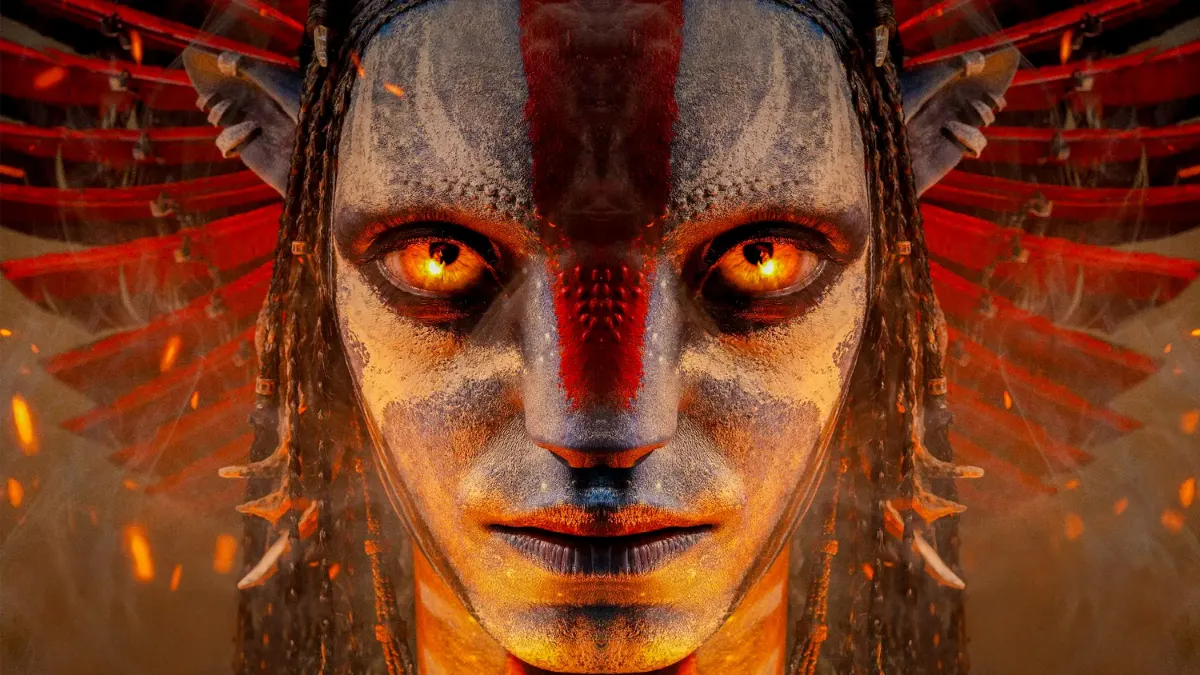
The new threat is the Ash People — the Mangkwan, a rival Na’vi tribe that has sided with the human RDA forces rather than against them. Their leader is Varang, played by Oona Chaplin. She is the best thing in the film, full stop.
Chaplin gives Varang a cold, specific kind of conviction — the belief that collaboration is survival. She’s not evil in the way movie villains usually are. She’s made a deal and she’s going to see it through. The Los Angeles Times called her one of “dynamite villains” and the description is fair. Next to her, Quaritch almost feels familiar. Varang is the kind of threat the franchise has been missing since the first film.
Sigourney Weaver is back as Kiri. Kate Winslet returns in a role that is, once again, too small for how good she is. The film runs 3 hours and 17 minutes and is rated PG-13. It does not apologize for either of those things.
The Numbers and What They Mean
Here is what $1.48 billion actually represents.
The worldwide split: $401 million domestic, $1.079 billion international. Domestically, the film crossed the $400 million milestone on day 71 — slower than both of its predecessors by a significant margin. The opening weekend of $89 million is the franchise’s lowest opening ever, by a wide gap. The Way of Water opened to $134 million domestically. The original Avatar opened modestly too, but then it ran for 34 weeks and ended at $2.9 billion.
Against a $400 million production budget — before marketing, which for a film this size typically adds another $150–200 million — the math only works because of the international tail. France alone contributed $111 million. Germany added $94 million. China brought in $170 million. South Korea, $54 million. The film is a genuinely global event in a way almost nothing else currently is.
But here’s the blunt truth: Avatar: The Way of Water made $2.32 billion in 2022. The original Avatar holds the all-time worldwide record. When your franchise’s floor is two billion dollars, $1.48 billion feels like the ground giving way — even if, measured against anything else, it’s an extraordinary number.
Cameron set that trap himself. He didn’t just build a franchise. He built expectations so large that meeting them was already impossible.
What the Critics Said — and What Audiences Felt
Variety, The Guardian, and the LA Times all covered the film with a version of the same review: visually extraordinary, narratively familiar. The LA Times noted that plot-wise, “the story is the same as ever — earthlings want to pillage Pandora’s natural resources, the Na’vi fight back.” That’s fair. It’s also a choice Cameron made deliberately.
The American Film Institute named Fire and Ash in its top ten films of 2025. The National Board of Review did the same. The film received two Academy Award nominations — Best Costume Design and Best Visual Effects — and two Golden Globe nominations.
What strikes me most about the critical reception is this: the film is being judged as a story when Cameron is primarily making an experience. He builds worlds. He builds technology. He builds things that can only be seen at maximum scale — in IMAX, in 3D, on the biggest screen you can find. Watching Fire and Ash at home on a television is a bit like listening to a symphony on your phone speaker. The notes are technically all there. The thing itself is not.
That doesn’t excuse thin plotting. But it reframes what the film is actually trying to do.
The Avatar 4 Question
Two more Avatar films are scheduled — Avatar 4 in 2029, Avatar 5 in 2031. Both are already in various stages of development. Whether they actually get made depends, Disney has quietly signaled, on whether Fire and Ash ultimately justifies the investment.
At $1.48 billion, the argument for continuing is still there. The budget was $400 million. The worldwide gross is 3.7 times that figure. For most studios, that’s a success that triggers immediate sequel development. For Disney and Cameron, the math is complicated by the sheer scale of what Pandora costs to produce and market — and by the fact that each film appears to draw a slightly smaller audience than the one before.
The franchise is not dying. But it is contracting. And a contracting franchise with $400 million budgets is a problem that compound interest doesn’t solve.
Cameron has said publicly that he has the full story mapped to five films. He knows where this ends. The question is whether the audience will stay with him long enough to see it.
The Part Nobody Is Talking About
Lo’ak narrates the opening of Fire and Ash with a line about grief — about carrying the shape of someone who is gone. It sets a tone that the rest of the film only intermittently earns. The middle act loses its thread. The climax is big and correct and a little rote. But the first twenty minutes and the last thirty are as good as anything Cameron has made since the original.
The film is too long. The dialogue, as the LA Times gently noted, tips into surf-bro hysterical at moments that probably needed a second draft. Spider continues to be the character the audience is most conflicted about, which is the point, but the film doesn’t push that conflict far enough to really hurt.
And Oona Chaplin is right there, every time she appears, daring the whole film to match her energy. It doesn’t always. She does it anyway.
Avatar: Fire and Ash is not the best Avatar film. It is better than the reviews suggested and smaller than the box office implies. It is a $400 million movie made by a man who genuinely believes in the world he is building — which is a rarer thing in franchise filmmaking than it should be.
Whether that belief carries Avatar 4 into production depends on conversations happening right now in offices at Disney that Cameron probably isn’t in.
He’s busy building Pandora again.
Subscribe to our movie newsletter for box office updates.
Stay informed with the latest news, in-depth analysis, entertainment, technology, sports and exclusive insights like Avatar Fire and Ash, Fallout Season 2, Mariah Carey, and Emily in Paris. Visit Buzz Explained for more top stories, updates, and expert coverage from all around the world!