Four shows in. And the Yellowstone universe is still finding new angles.
Marshals TV Show premiered on CBS on March 1, 2026 — yesterday — making it the fourth series in Taylor Sheridan’s Yellowstone franchise and the first one to air on a broadcast network rather than Paramount+ or cable. That last part is the detail that matters most. Not because it changes what the show is, but because it changes who can watch it and what CBS is betting on by giving it the Sunday 8 PM slot — the most watched hour of the week on American television.
This is not a side project. This is a calculated move.
What the Show Is Actually About
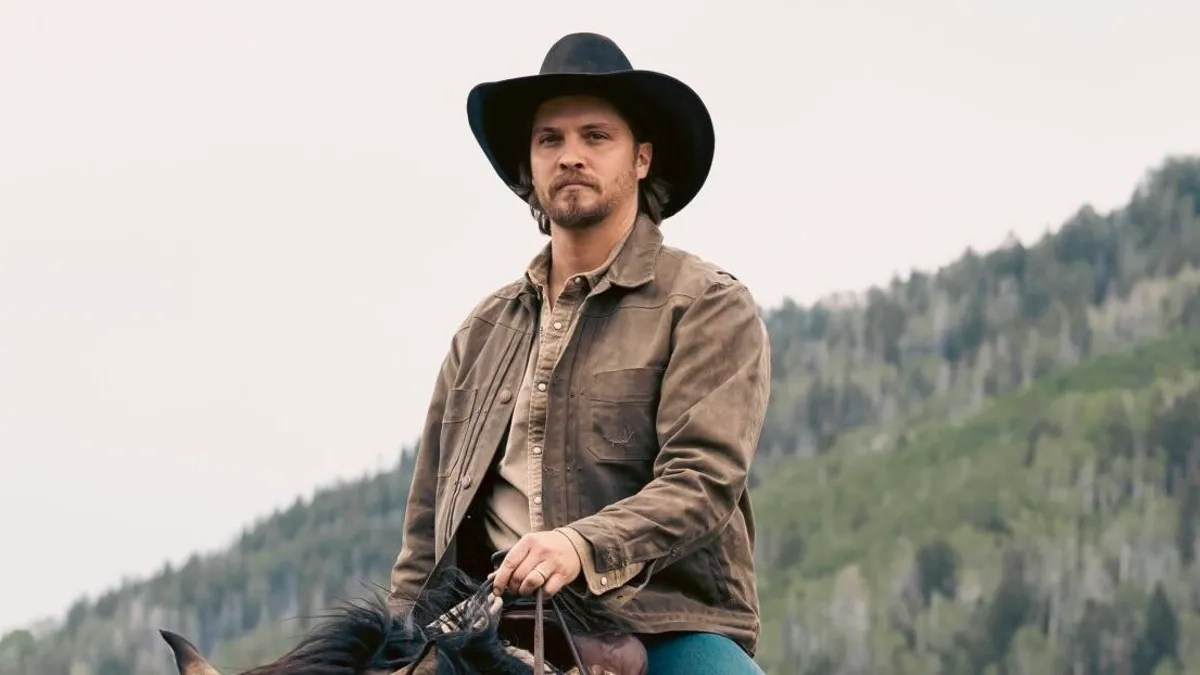
Marshals TV Show picks up after Yellowstone ended in 2024. Kayce Dutton — the youngest Dutton sibling, ex-Navy SEAL, played throughout the original series by Luke Grimes — has walked away from Yellowstone Ranch. He joins an elite unit of U.S. Marshals in Montana, where he combines his military skills and his deep familiarity with the land to go after the kind of criminals that regular law enforcement can’t reach.
The Marshals TV Show unit around him includes Pete Calvin (Logan Marshall-Green), a new character and clearly the show’s co-lead; Belle Skinner (Arielle Kebbel), last seen in Vampire Diaries and Rescue: Hi-Surf; Andrea Cruz (Ash Santos); and Miles Kittle (Tatanka Means), a Native actor who has appeared in Reservation Dogs, Outer Range, and I Know This Much Is True.
Returning from Yellowstone are Gil Birmingham as Thomas Rainwater, Mo Brings Plenty as Mo, and Brecken Merrill as Tate — Kayce’s son, now older, and still part of his father’s life.
One notable absence: Kelsey Asbille, who played Monica, Kayce’s wife, throughout Yellowstone. She is not in the confirmed cast. The show does not explain her absence in early episodes. That thread will likely surface later in the season.
The series runs 13 episodes across its first season, with Episode 1 titled “Piya Wiconi” and Episode 2 “Zone of Death.” New episodes air Sundays at 8 PM ET on CBS, with Paramount+ subscribers getting them the following day.
Kayce Dutton, Rebuilt
Kayce was always the Dutton child the show treated most carefully. John was the patriarch. Beth was the weapon. Jamie was the wound. Kayce was the conscience — a man who had done violence for his family and was trying to figure out whether he could live with that.
Marshals TV Show takes that foundation and builds a procedural around it. Kayce is not running from what he’s done. He’s trying to channel it into something that serves a purpose beyond protecting one ranch’s property line. The U.S. Marshals structure gives that a framework — a team, a jurisdiction, a mission that isn’t personal the way Yellowstone Ranch always was.
Logan Marshall-Green as Pete Calvin is the most interesting new addition. Marshall-Green has been one of the best character actors in television for a decade — patient, understated, and capable of making complex moral calculations look like instinct. Putting him alongside Grimes creates an immediate tension: two men who are both good at their jobs and almost certainly going to disagree about what “good” means in the Montana backcountry.
Arielle Kebbel’s Belle Skinner is introduced quickly in the premiere as someone who has her own history with the region and her own reasons for doing this work. The show is smart not to over-explain her in the first episode. Let the character earn the backstory.
Spencer Hudnut, Not Sheridan
Here is something the coverage of Marshals TV Show keeps glossing over: Taylor Sheridan is the executive producer, but he did not create this show.
Spencer Hudnut — who ran SEAL Team on CBS for several seasons — is the showrunner and creator. That distinction matters. Sheridan’s fingerprints are on the world, the characters, and the mythology. But the week-to-week writing, the episode structures, the pacing decisions — those are Hudnut’s.
SEAL Team was a procedural military drama that ran seven seasons and built a loyal audience on exactly the kind of combination Marshals TV Show is attempting: action-driven plots, genuine emotional weight, a team structure where each member’s personal life feeds into the professional stakes. Hudnut knows how to make that work. He also knows CBS. The network’s rhythms, its audience expectations, its tolerance for serialisation versus standalone storytelling.
What strikes me most about the Marshals TV Show creative structure is how deliberate it is. Sheridan’s brand opens the door. Hudnut’s procedural instincts build the house behind it.
The CBS Slot and What It Means
This is the part of the Marshals TV Show story that goes beyond the show itself.
CBS is not a streaming service. It is the most-watched broadcast network in America — the network of 60 Minutes, Tracker, Watson, FBI, and NCIS. It reaches audiences that Paramount+ does not: older viewers, rural viewers, households without strong streaming habits.
Putting Marshals TV Show at 8 PM on Sundays — right after 60 Minutes, right before Tracker — is an attempt to make it part of a live television event. Not a binge. Not a drop. A weekly appointment.
That is a fundamentally different bet than the one Paramount+ made with 1923 or Landman. Those shows required a subscription. Marshals TV Show requires an antenna or a cable package that millions of American households already have. The barrier to entry is almost nothing.
And the Yellowstone franchise already proved its audience skews toward exactly the kind of viewer who still watches broadcast television. The original series ran on Paramount Network — a cable channel — and regularly delivered 10 to 12 million viewers per episode when DVR and delayed viewing was counted. Those viewers are not difficult to find. They’re already watching CBS on Sunday nights.
Marshals TV Show doesn’t have to teach people to care about Kayce Dutton. It just has to show up where they already are.
What the First Episode Sets Up
Episode 1 — “Piya Wiconi,” a Lakota phrase meaning “water is life” — establishes the team, the territory, and the first major case without overloading any of the three. Kayce is established as someone carrying the weight of everything that happened at Yellowstone Ranch without being defined by it. His relationship with Tate — now living with him, now older — gives the show its emotional through-line immediately.
The case structure in the pilot involves cross-jurisdictional violence in Montana’s backcountry — the kind of crime that sits between federal authority and reservation sovereignty, which is exactly the kind of layered legal and cultural territory Sheridan has always handled better than most writers working in American television.
The procedural bones are solid. The character work is patient. The Montana cinematography — shot in Summit County, Utah, which was also used for Yellowstone‘s first three seasons — looks like it always does: enormous, cold, and indifferent to whatever the humans in it are trying to resolve.
Episode 2, “Zone of Death,” airs next Sunday. Based on the title alone, it is not a quiet week.
The Yellowstone franchise didn’t end when the show did. It just changed zip code.
Stay informed with the latest news, in-depth analysis, entertainment, technology, sports and exclusive insights like Marshals TV Show, SAG Awards 2026, The Housemaid, and Kith Sopranos. Visit Buzz Explained for more top stories, updates, and expert coverage from all around the world!