The Moon does not really change shape. Its shape stays the same all month. What changes is how much of its sunlit side we can see from Earth.
Moonlight is sunlight
The Moon makes no light of its own. What we call moonlight is sunlight bouncing off the Moon’s surface. Without the Sun, NASA says, the Moon would be completely dark.
Always half lit
Sunlight comes from one direction. So it always lights one half of the Moon, the half facing the Sun. The other half stays dark.
Our view moves with the orbit
The Moon travels around Earth. As it moves, we see a different slice of its lit half each night. When we can see the whole lit side, that is a full moon.
After each full moon, we see less and less of the lit side. In time, the far side of the Moon faces the Sun. The side facing us is dark, and we cannot see the Moon at all. That is a new moon.
Eight shapes, in order
NASA names eight phases. Here they are as they come, using the Northern Hemisphere view:
- New: the Moon cannot be seen.
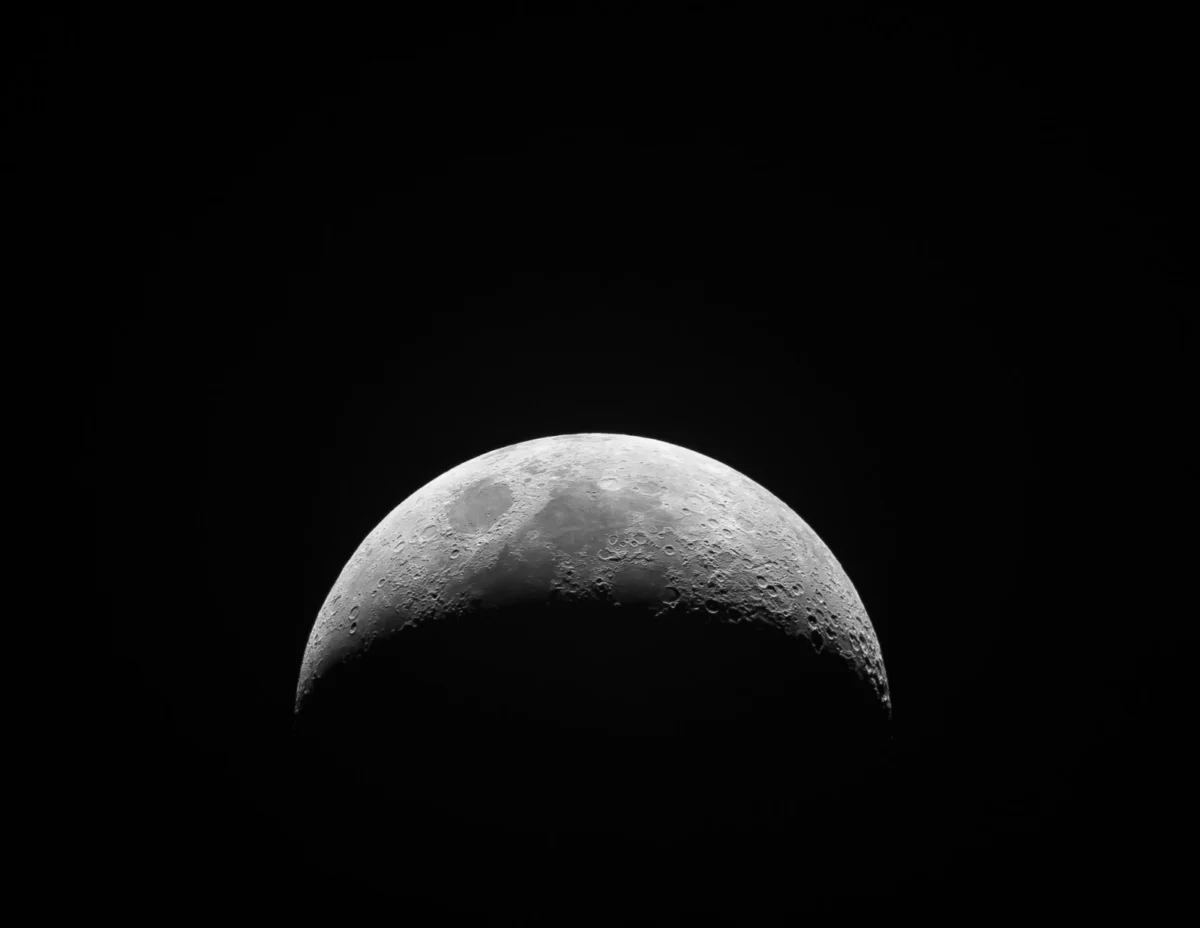
- Waxing crescent: a thin sliver of light on the right.
- First quarter: a half moon.
- Waxing gibbous: between a half moon and a full moon.
- Full: the whole face is lit.
- Waning gibbous: between a full moon and a half moon.
- Third quarter: a half moon again, lit on the opposite side.
- Waning crescent: a thin sliver of light on the left.
Two handy words
Waxing means the lit part is getting bigger. Waning means it is getting smaller. Gibbous describes the phases between a half moon and a full moon.
Why the cycle runs longer than one orbit
The Moon takes about 27.3 days to go around Earth once. Yet one new moon to the next takes about 29.5 days. NASA says the difference comes from how sunlight hits the Moon as it moves.
Sunlight itself takes time to reach us, as our light-year explainer shows.